Stop Automating Chaos: Why Your AI Strategy Needs a “Well-Oiled” Foundation

In today’s hyper-competitive corporate landscape, leaders across North America and Europe are rushing to implement artificial intelligence.

The promise of massive productivity gains is incredibly alluring.

However, layering advanced AI tools over a broken, reactive operational framework is a recipe for disaster.

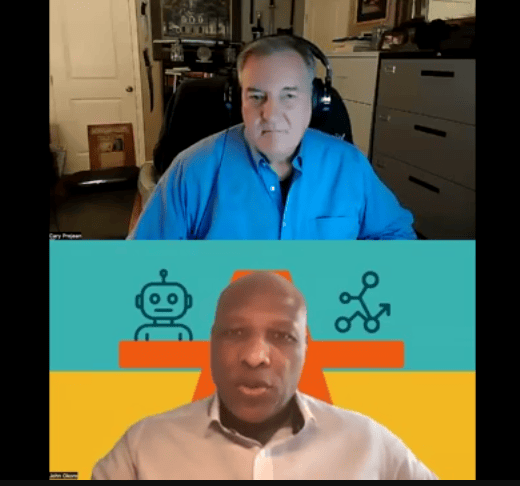
On a recent episode of the Aiscento Podcast, veteran CPA and strategic business advisor Cary Prejean warned against the dangers of “automating chaos” and outlined exactly how to build a foundation that is truly ready for AI integration.

The “Founder Bottleneck”

Before an organization can innovate, it must honestly assess its current state.

Prejean notes that most businesses eventually stall because the founder or CEO becomes the ultimate bottleneck.

When every decision must pass through one person, growth stops, and the company enters chronic “firefighting mode.”

You cannot successfully deploy AI if your organization relies entirely on heroic interventions from leadership rather than established systems.

The Three Pillars of a Well-Oiled Machine

To move away from bottlenecks and prepare for next-generation automation, leaders must establish what Prejean calls a “well-oiled machine.”

This requires three non-negotiable pillars:

Documented Processes: Every critical function must have a standardized, documented step-by-step process.

If employees are constantly guessing how to do their jobs, AI will have no clear parameters to operate within.

Actionable Financial Data: Managing by your “gut” or your checking account balance is obsolete.

Leaders need consistent Key Performance Indicators (KPIs) and regular financial ratio analyses to track liquidity, profitability, and efficiency.

Future-Focused Design: The CEO must declare a crystal-clear vision of what the company will look like in 5 to 10 years.

Clarity eliminates the distraction of chasing every shiny new technological object.

Making AI Work for You

Once your core processes are documented and your data is clean, AI becomes an incredible accelerator.

For example, instead of a manager spending hours drafting standard operating procedures (SOPs), they can feed rough employee notes into an AI agent to instantly generate comprehensive training manuals.

AI can also digest monthly financial statements in seconds, providing a detailed ratio analysis compared to industry standards.

But remember: AI is an amplifier.

If you feed it clean data and strong systems, you get a scalable enterprise.

If you feed it disorganization, you just get faster chaos.


Join the Aiscento Community

Discover: See the platform we are engineering: Aiscento Platform

Join our professional ecosystem on LinkedIn: Aiscento LinkedIn

Watch the Full Video: Youtube

#FounderStories #TechStartups #AiscentoPodcast #VC #Scaleups #AIInnovation #BusinessStrategy #ExecutiveLeadership

Tagged with: , , , , , , , , , ,
Posted in Agile, AI, AIScento, Artificial Intelligence, Uncategorized

The ROI of Somatic Intelligence: Unlocking Executive Clarity in the AI Era

When we discuss the future of corporate leadership, the conversation is heavily dominated by data analytics, automation strategies, and machine learning integration.

However, as AI handles more of the analytical and repetitive work, uniquely human capabilities like intuition, empathy, and nervous system regulation are becoming an organization’s ultimate competitive advantage.

Dr. Carley Corrado, a former PhD scientist in chemistry and physics turned leadership transformer, joined the Aiscento Podcast to explain why concepts like “somatic intelligence” are no longer just wellness buzzwords.

They are foundational requirements for executive clarity.

The Problem with the “Floating Mind”

Many executives operate as “floating minds,” entirely disconnected from their physical bodies and operating strictly on cognitive overdrive.

This disconnect is dangerous.

According to Dr. Corrado, tension, unaddressed conflict, and the sheer volume of modern information overload live within the nervous system.

When an executive team lacks cohesion or carries unresolved interpersonal “ick,” it ripples down through the entire company.

It forms “eddy currents” whirlpools of wasted energy where projects stall, engagement drops, and top talent leaves.

Composting the Past to Build the Future

One of the most powerful tools Dr. Corrado introduces to analytical leaders is the concept of “composting.”

This involves doing the deeper work to recognize and release internal triggers and biases that dictate poor decision making.

Expand Your Range: By engaging in somatic practices (like intentional breathwork or taking deliberate space to process frustration), leaders can shift out of reactive, fear based responses.

Access Direct Intelligence: Quieting the “default mode network” (the brain’s inner critic) allows executives to tap into profound, unforced creativity.

Often, the solutions to complex organizational problems arrive not from staring at a spreadsheet, but from accessing an open, flow state mind.

Incorporate AI into Wellness: You can actually use AI to support your state of being.

Executives can prompt AI to help them structure daily workflows that protect their creative time, or even ask it for quick, three minute reset exercises between intense meetings.


Join the Aiscento Community

1️⃣ Listen: Hear from other innovators cutting through the noise: Aiscento Playlist

2️⃣ Discover: See the platform we are engineering: Aiscento Platform

Join our professional ecosystem on LinkedIn: Aiscento LinkedIn

Watch the Full Video: Youtube

#ExecutiveCoaching #LeadershipSkills #TechStartups #AiscentoPodcast #SomaticIntelligence #AIInnovation #BusinessGrowth

Tagged with: , , , , , , , , , ,
Posted in Agile, AI, AIScento, Artificial Intelligence, Auspicious Agile, Uncategorized

Why AI Efficiency is Causing Burnout (And How “Flow State” Leadership Fixes It)

In the modern enterprise, artificial intelligence is massively accelerating the speed of work.

Every week, new models and tools are released that promise to make teams faster, leaner, and more productive.

Yet, for many organizations, this relentless acceleration isn’t resulting in breakthrough innovation, it’s resulting in information overload, nervous system burnout, and declining employee engagement.

On a recent episode of the Aiscento Podcast, Dr. Carley Corrado, founder of Enliven Leadership, shared a critical perspective: successful AI transformation is not just about adopting new technology; it’s about transforming the human environment to handle that technology.

The Cost of the “Vigilance” State

When technology outpaces human adaptation, teams often enter what Dr. Corrado refers to as a “vigilance state.”

Instead of feeling inspired and creative, employees operate from a baseline of stress and survival.

When your workforce is stuck in a high stress “beta brainwave” state, trying to frantically keep up with endless AI generated outputs, they cannot access the deeper creativity required for strategic problem solving.

This vigilance state inherently caps an organization’s potential because decisions are being made from anxiety rather than clarity.

Redefining High Performance Through Flow State

To counter this, Dr. Corrado advocates for “Flow State Leadership.”

This isn’t about pushing teams to work harder; it’s about creating an ecosystem where people feel psychologically safe to share their perspectives and “empty out” the noise.

How can leaders build this?

Prioritize Radical Clarity: Before asking AI to solve a complex problem, leaders must do the pre work.

Define the exact intention, the underlying “why,” and the metrics for success.

If you apply AI to a chaotic system, you just get faster chaos.

Democratize Information: High performance comes from the ground up.

When launching new AI initiatives, organizations must take the time to gather input from across the team, not just the executive suite.

Transparency builds the trust necessary to weather disruptive change.

Regulate the Collective Nervous System: Incorporate simple, human centric check ins.

Taking moments to celebrate wins, share genuine gratitude, or clear up small interpersonal tensions saves massive amounts of lost momentum down the line.


Join the Aiscento Community

1️⃣ Listen: Hear from other innovators cutting through the noise: Aiscento Playlist

2️⃣ Discover: See the platform we are engineering: Aiscento Platform

Join our professional ecosystem on LinkedIn: Aiscento LinkedIn

#FutureOfWork #LeadershipDevelopment #TechStartups #AiscentoPodcast #FlowState #AIInnovation #MentalHealthInTech

Watch the Full Video: https://youtu.be/EVJL5fdJs9M

Tagged with: , , , , , , , , ,
Posted in Agile, AI, AIScento, Artificial Intelligence, Auspicious Agile, Business Agility, Uncategorized

Why Traditional SEO Isn’t Enough: The Shift to Answer Engine Optimization (AEO)

In today’s fast paced digital economy, Western brands and global enterprises are facing a massive shift in how customers discover products.

The days of relying solely on traditional SEO to capture human searchers are ending.

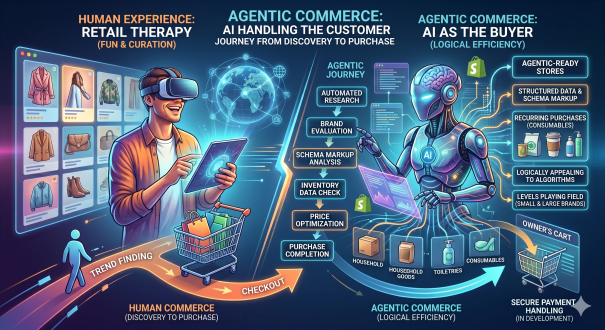
Instead, we are entering the era of Answer Engine Optimization (AEO), where AI bots are increasingly the ones evaluating and recommending your business.

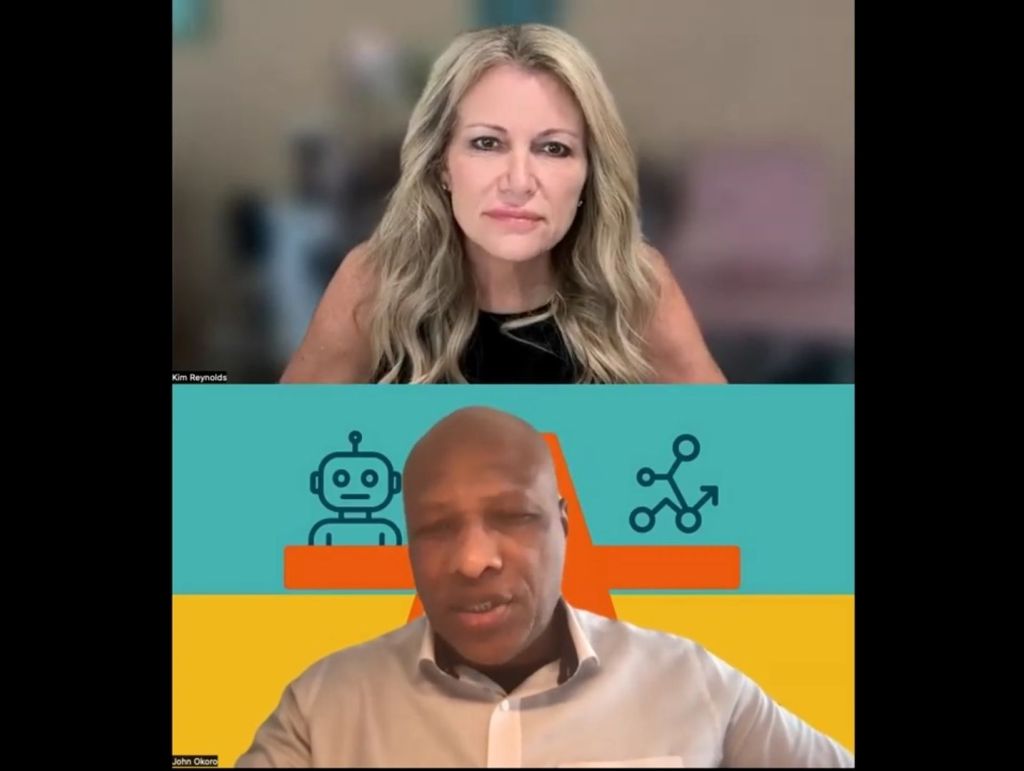
In a recent episode of the Aiscento Podcast, digital strategist Kim Reynolds broke down exactly why traditional SEO is no longer enough and what businesses must do to remain visible.

The Evolution from SEO to AEO

For years, businesses have optimized content for human reading and search engine keyword matching.

However, as AI systems like ChatGPT, Claude, and Perplexity become primary discovery tools, the customer journey is changing.

According to Reynolds, the biggest difference in this new landscape is that AI bots cannot inherently read your content unless it is structured properly for them.

While AEO doesn’t replace SEO, good AEO is actually built on a foundation of strong SEO, and it adds a critical new layer to your digital strategy.

Schema: The Language of AI Bots

If there is one technical upgrade your business needs immediately, it is schema markup.

Schema is the structured data that tells AI exactly what your business is, what you sell, and the specific attributes of your products.

When AI agents are looking for a product to recommend, they don’t care how beautiful your website design is.

They look for hard data: dimensions, materials, inventory status, and shipping policies.

If your product descriptions and backend attributes are weak, your discoverability disappears entirely.

Stop Hiding from the Future

The most common mistake businesses are making right now is simply ignoring this shift because it sounds complicated.

But the businesses that take the time to set up organizational, service, and product schema today are the ones that will be successfully recommended by AI tomorrow.

Watch here :


Join the Aiscento Community

1️⃣ Listen: Hear from other innovators cutting through the noise: Aiscento Playlist

Join our professional ecosystem on LinkedIn: Aiscento LinkedIn

Watch the Full Video: https://youtu.be/CuHOiIxlKr4

#FounderStories #TechStartups #AiscentoPodcast #VC #Scaleups #AIInnovation #AnswerEngineOptimization #DigitalMarketing #SchemaMarkup

Tagged with: , , , , , , , , , ,
Posted in Agile, AI, AIScento, Artificial Intelligence, Auspicious Agile, Uncategorized

Why AI Won’t Fix Your Broken Sales Process: Getting Back to Fundamentals

Every day, business feeds are flooded with the latest promises of AI powered revenue growth: AI SDRs, automated outreach, predictive forecasting, and intelligent call analysis.

Yet, despite massive investments in these cutting edge technologies, many organizations still struggle to consistently hit their revenue targets.

In a recent episode of the Aiscento Podcast, Mark Kesti, President and Chief Revenue Officer of Innovo Sales, joined the show to deliver a hard truth to growing enterprises: AI is a powerful accelerator, but it cannot replace fundamental sales strategy, leadership, and process discipline.

The “Shiny Object” Trap

When sales stall, leaders often look for a quick technological fix.

However, as Kesti points out, if you do not have an existing, repeatable, and scalable sales operating system, adding artificial intelligence will simply speed up the time it takes to uncover your foundational gaps.

AI deployed over a bad process just creates bad results faster.

Before investing in AI automation, organizations must establish a solid foundation.

A highly defined Ideal Customer Profile (ICP): Being “an inch deep and a mile wide” is the kiss of death for B2B companies.

You must narrow your focus to specific targets before you try to scale outreach.

A documented, repeatable buyer journey: You need to know exactly what a best in class discovery call looks like, what the typical objections are, and the specific actions required to move a deal from one CRM stage to the next.

Effective coaching: AI can analyze calls, but consistent, one on one human coaching from a sales manager remains one of the most reliable ways to increase sales performance.

CRM Discipline is Non Negotiable

You cannot leverage AI effectively without clean data.

CRM discipline is vital, but getting compliance from a sales team is notoriously difficult.

To fix this, your CRM must be configured to do two specific things: help salespeople sell more products and decrease their sales cycle times.

When stages are strictly defined so a deal isn’t moved to “Proposal” until the proposal is actually presented the data becomes clean.

Once the data is clean, you can accurately measure predictive metrics like pipeline velocity and use AI agents to generate actionable, real time dashboards.

The Takeaway

AI is not a panacea for missed quotas or reactive sales teams.

Build a rock solid, well managed sales foundation first.

Once you know exactly what works, you can unleash AI to turbocharge those actions and give your sales professionals more time to do what AI can’t: build human trust.


Join the Aiscento Community

1️⃣ Listen: Hear from other innovators cutting through the noise: Aiscento Playlist

2️⃣ Discover: See the platform we are engineering: Aiscento Platform

Join our professional ecosystem on LinkedIn: Aiscento LinkedIn

Watch the Full Video: https://youtu.be/Vs_ezS9SH14

#B2BSales #RevenueGrowth #TechStartups #AiscentoPodcast #SalesStrategy #CRM #AIInnovation #SalesLeadership

Tagged with: , , , , , , , , , ,
Posted in Agile, AI, AIScento, Artificial Intelligence, Auspicious Agile, Uncategorized

Scaling Beyond Founder-Led Sales: How to Institutionalize Tribal Knowledge Using AI

One of the most common hurdles for growing tech companies and professional services firms across North America and Europe is the transition from founder led selling to a scalable revenue engine.

The CEO built the business, knows the product inside and out, and can overcome any objection.

But when it comes time to scale, handing a new hire a product deck and saying “just do what I do” is a recipe for disaster.

On the latest Aiscento Podcast, Mark Kesti of Innovo Sales explained how organizations can utilize artificial intelligence to extract critical tribal knowledge from the founder’s head and build a repeatable sales playbook.

The Problem with “Heroic” Selling

In many scaleups, early revenue is driven by heroics, usually the founder or a couple of superstar early employees carrying the entire quota.

The founder has had hundreds of discovery meetings.

They know exactly how to read a room, what competitors to watch out for, and the hidden value their product provides.

No new salesperson will ever naturally match that level of intuition.

Extracting Knowledge with AI

The solution isn’t to hope your new hires figure it out; it’s to institutionalize the founder’s experience.

AI makes this faster and easier than ever before:

Interview and Record: Record casual conversations with the founder walking through specific stages of the sales process.

Ask them how they handle discovery, how they pitch the unique value proposition, and how they overcome the most common rejections.

Generate Playbooks Automatically: Feed these transcripts into Large Language Models (LLMs) like Claude or ChatGPT and prompt the AI to distill the conversations into structured, best in class sales playbooks.

Create Interactive Knowledge Bases: Take your existing legacy documents, the new AI generated playbooks, and competitive intel, and organize them into a clean repository.

The End of the “Time Suck”

By layering an AI agent (like Microsoft Copilot) over your clean document repository, you instantly build a self serve enablement engine.

Instead of a new account executive having to interrupt a manager to ask a question about a process, they can simply ask the AI agent in natural language.

The AI instantly retrieves the exact, best in class answer based directly on the founder’s original strategies.

When you capture tribal knowledge and make it instantly accessible, you stop relying on sales heroics and start building a predictable, scalable growth machine.

Watch here:


Join the Aiscento Community

1️⃣ Listen: Hear from other innovators cutting through the noise: Aiscento Playlist

2️⃣ Discover: See the platform we are engineering: Aiscento Platform

Join our professional ecosystem on LinkedIn: Aiscento LinkedIn

Watch full video here: https://youtu.be/Vs_ezS9SH14

#FounderStories #Scaleups #AiscentoPodcast #VC #TechStartups #SalesEnablement #ArtificialIntelligence #BusinessGrowth

Tagged with: , , , , , , , , ,
Posted in AI, AIScento, Artificial Intelligence, Auspicious Agile, Uncategorized

The Automated Lifecycle: How AI Rewrites the Rules of Product Delivery

For two decades, the Software Development Life Cycle (SDLC) has relied on heavily manual management frameworks.

We built entire corporate cultures around tracking velocity charts, writing out individual requirements, and manually ushering code from a developer’s laptop out to a production server.

Today, generative AI systems are infiltrating every single phase of this traditional lifecycle, shifting the core bottlenecks of product delivery overnight.

The End-to-End Automation Wave
AI is no longer just an autocomplete tool for software engineers.

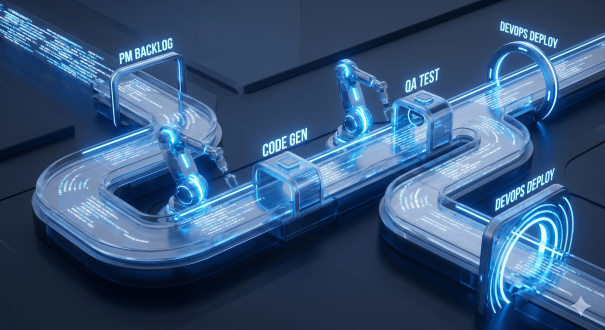
It has evolved into a systems-level collaborator that reshapes three major operational tiers:

Product Architecture & Scope: Advanced models can instantly ingest high-level user feedback, analyze market trends, prioritize massive backlogs, and convert raw business requirements into flawless, structured user stories complete with precise acceptance criteria.

Code Auditing & Quality Assurance: Beyond initial code generation, AI systems are highly proficient at auditing legacy codebases, autonomously identifying syntax errors, catching security vulnerabilities, and running complex, virtualized testing loops without human intervention.

DevOps & Infrastructure: Modern deployment monitors can intelligently parse systemic traffic data to calculate the exact, low-impact window to ship a new feature, drastically mitigating downstream downtime.

Traditional Scrum Tensions ──> AI-Accelerated Agility
• Manual user story drafting • Automated criteria generation
• Painstaking debugging loops • Autonomous code & logic repair
• Arbitrary deployment scheduling • Data-driven infrastructure analysis

The Shifting Role of Management
When the technical friction of generating, testing, and shipping code drops toward zero, the traditional role of an enforcement-style manager or an administrative Scrum Master fundamentally evaporates.

Teams no longer need human overhead to facilitate tracking or coordinate handoffs. The focus must pivot away from managing processes and toward maximizing value.

https://www.youtube.com/watch?v=7uFn9CZJw3U


Join the Aiscento Community
1️⃣ Listen: Hear from other innovators cutting through the noise: Aiscento Playlist

2️⃣ Discover: See the platform we are engineering: Aiscento Platform

Join our professional ecosystem on LinkedIn: Aiscento LinkedIn

#FounderStories #TechStartups #AiscentoPodcast #VC #Scaleups #AIInnovation

Watch the Full Video: https://youtu.be/7uFn9CZJw3U?si=Gvz7Q37rH7GEu8AK

Tagged with: , , , , , , , , , , ,
Posted in AI, Artificial Intelligence, Auspicious Agile, Entrepreneurship, Uncategorized

The Death of the Grunt-Work SDR (And Why AI is Elevating Sales)

For decades, the standard corporate playbook for growing a B2B business involved building an army of entry-level Sales Development Representatives (SDRs).

Their primary mandate was clear, if mind-numbing: sit in front of a screen for eight hours a day, copy-paste cold outreach templates, manually source leads, fiddle with CRM fields, and hope for a 1% conversion rate.

It was a numbers game built entirely on human brute force. But that era is officially over.

Automating the Administrative Grind
The entry-level layer of cold prospecting is the exact type of repetitive “grunt work” that artificial intelligence is optimized to eliminate.

By combining modern prospecting engines with automated cold email orchestration platforms, a single lean team can now flawlessly execute tens of thousands of deeply personalized outbound touchpoints at a fraction of the traditional cost.

[Traditional SDR Setup] [AI-Augmented Outbound]
• $60k–$80k Base Salary Base • Fractional Software Overhead
• High Turnover & Onboarding Lag • Constant, Scalable Execution
• Limited Manual Input Volume • 30,000+ Tailored Touchpoints

When you look at the raw unit economics, the traditional model simply cannot compete with software-driven outbound efficiency.

Shifting Human Talent Upward
This technical shift is frequently met with panic, but it shouldn’t be. AI is not wiping out sales organizations; it is aggressively optimizing them.

By automating the logistical and administrative chaos, software clears the deck so that human professionals can focus entirely on what they actually enjoy and excel at:

Building deep, foundational trust with high-value prospects.

Navigating complex, emotionally nuanced human objections.

Closing strategic deals through real-time collaboration and face-to-face interactions.

Sales has always been about human-to-human connection.

By delegating the digital paperwork to intelligent systems, sales professionals are finally being freed to actually sell.


Join the Aiscento Community
1️⃣ Listen: Hear from other innovators cutting through the noise: Aiscento Playlist

2️⃣ Discover: See the platform we are engineering: Aiscento Platform

Join our professional ecosystem on LinkedIn: Aiscento LinkedIn

FounderStories #TechStartups #AiscentoPodcast #VC #Scaleups #AIInnovation

Watch full video on Youtube: https://www.youtube.com/watch?v=gESbo0n0kwc

Tagged with: , , , , , , , , , ,
Posted in AI, Artificial Intelligence, Uncategorized

The “Bottom 40%” Rule: Balancing AI Efficiency with Human Storytelling

In the rush to adopt generative AI, many founders and marketing teams are making a critical, short-sighted mistake: they are handing 100% of their content creation and brand building over to machines.

The immediate result is a staggering influx of flat, sterile, and heavily repetitive digital noise across the web.

While it has never been easier to produce volume, it has never been harder to capture human attention.

To stand out, brands must learn to implement a strict boundary between automated production and human creativity.

The 40/60 Split Matrix
To maintain an authentic brand identity while still scaling production, high-growth organizations rely on a balanced division of labor:

AI Integration Matrix
├── Bottom 40%: Operational Leverage
│ └── Sourcing initial data, drafting structural templates, generating project briefs
└── Top 60%: Creative Resonance
└── Injecting raw storytelling, editing for emotional depth, applying senior oversight

AI is an exceptional starting block, but a terrible finish line. It can build the skeleton of a marketing campaign in seconds, but it cannot breathe life into it.

The Trust Factor in an Automated World
Modern buyers have developed an incredibly acute, subconscious detector for automated copy and deep-fake outreach.

Authentic marketing relies entirely on vulnerability, unique perspective, and emotional resonance qualities that large language models can only mimic, not possess.

“Trust is the most important element in selling. If trust comes into question if a prospect realizes they are being deceptively handled by a bot pretending to be human the deal is dead, and your brand’s reputation goes down with it.”

Use artificial intelligence to conquer the blank page, optimize your workflows, and speed up turnaround times.

But never let a machine have the final say on how you tell your story to the world.


Join the Aiscento Community
1️⃣ Listen: Hear from other innovators cutting through the noise: Aiscento Playlist

2️⃣ Discover: See the platform we are engineering: Aiscento Platform

Join our professional ecosystem on LinkedIn: Aiscento LinkedIn

FounderStories #TechStartups #AiscentoPodcast #VC #Scaleups #AIInnovation

Watch the Full Video: https://www.youtube.com/watch?v=gESbo0n0kwc

Tagged with: , , , , , , , , , ,
Posted in Agile, AI, Artificial Intelligence, Uncategorized

Modern Operations: Driving Practical Savings and Managing AI Like an Employee

True project agility goes far beyond software development or simple corporate buzzwords it is a persistent, common-sense mindset built on grit and problem-solving.

When teams successfully merge this foundational methodology with modern artificial intelligence, they can achieve groundbreaking operational efficiency.

Case Study: How AI Saved a Team $1,500 on a Mechanical Fix
The power of AI isn’t just theoretical; it drives immediate, tangible business savings.

In a recent breakthrough, a cross-functional team bypassed a steep $1,500 external repair estimate for a piece of heavy machinery by looking outside conventional troubleshooting lanes.

By inputting detailed visual photography, precise equipment logs, and highly contextual prompts into AI tools, the team successfully diagnosed and resolved the mechanical breakdown entirely on their own.

This is a prime example of how combining cross-functional collaboration with smart prompting can instantly protect a company’s bottom line.

The Golden Rule: Onboard and Manage AI Like Capable Staff
To consistently replicate these kinds of results, business leaders must shift how they view technology.

Successfully implementing AI involves much more than just a quick software deployment; it requires a strategic management approach.

To get the highest possible performance out of AI while mitigating risks, you should treat your AI integration exactly like onboarding a highly capable, intelligent new employee:

Align it with your vision: Clearly define your company’s mission, goals, and context within your prompts.

Establish strict feedback loops: Constantly review outputs, correct wrong assumptions, and refine the AI’s data.

Maintain quality control: Because AI can make confident mistakes, never lose the “human in the loop” to verify the final product.

By bridging the gap between advanced technology and fundamental human leadership, modern managers can seamlessly unite operations and maximize profitability.

Ready to revolutionize your team’s day-to-day workflow?
Watch the full episode for actionable breakdowns and real-world examples:


Join the Aiscento Community
1️⃣ Listen: Hear from other innovators cutting through the noise: Aiscento Playlist

2️⃣ Discover: See the platform we are engineering: Aiscento Platform

Join our professional ecosystem on LinkedIn: Aiscento LinkedIn

#FounderStories #TechStartups #AiscentoPodcast #VC #Scaleups #AIInnovation

Watch the Full Video: https://youtu.be/F9d5bdETqy0?si=wsPTHBmtLyXuVFRB

Tagged with: , , , , , , , , , ,
Posted in AI, Artificial Intelligence, Uncategorized
Categories